
 Αναρτήσεις


Εμφάνιση αναρτήσεων με ετικέτα classic motorsport. Εμφάνιση όλων των αναρτήσεων
Εμφάνιση αναρτήσεων με ετικέτα classic motorsport. Εμφάνιση όλων των αναρτήσεων
Παρασκευή 9 Δεκεμβρίου 2022


Τρίτη 31 Μαΐου 2022
Walter Röhrl and the Porsche 964 Carrera 3.8 RS
“This Automobile is a real Pleasure”, these are the exact words Walter Rorhl used to describe the Porsche 964 Carrera 3.8 RS when he wrote the famous article on Christophorus Magazine in 1993. He said more, on the engine for example: “This engine responds spontaneously to the throttle, the intake noise pleases me”. But, reading the Christophorus article almost 30 years later made us feel how would it be for Walter to drive this very car now, and how would it be to take the same exact photos Michael Moesch took for the article and that became the official photos of one of the rarest and most desirable Porsche ever made? Well, since here at ISSIMI we like to take things seriously, when we found the car in 2022 somewhere in Europe, we wanted to recreate the same pictures and have Walter to describe the car now, after almost 30 years.
Let the Expert Speak is an informative conversation between Luca Venturi and a prominent guest from the automotive world. An expert. In a world where everybody has an opinion and a need to communicate it to the world, Let the Expert Speak will let the expert speak about something they've mastered.
ISSIMI is an enthusiast-owned, full-service specialist offering sales, consignment, collection management, service, and consulting to discerning enthusiasts and collectors. Specializing in complex transactions that include international services for exceptional cars, ISSIMI’s San Francisco Bay Area and Europe-based teams of experts pride themselves on transparency and knowledge.
#ISSIMI #PORSCHE #CARRERA RS 3.8
Don't forget to visit: https://www.issimi.com/
ISSIMI Instagram: https://www.instagram.com/issimiofficial

Κυριακή 11 Ιουλίου 2021

Πέμπτη 17 Ιουνίου 2021
Homologation Specials: 1972 BMW 3.0 CSL
In this episode of Homologation Specials, Alain de Cadenet spends an afternoon with BMW’s supremely beautiful bid for touring car supremacy in the 1970s, the 3.0 CSL. Conceived by a group of brilliant minds at Alpina and BMW Motorsport, the CSL more than measured up its task in the European Touring Car Championship, winning the manufacturers’ title in 1973, ’75, ’76, ’77, ’78, and ’79. Proving its endurance chops for good measure, it also won its class at Le Mans in 1973, and overall at the 1975 12 Hours of Sebring and the 1976 Daytona 24 Hours.
“Dominant” is an understatement of the car’s abilities on the race track, but the road-going versions of the CSL are revered by enthusiasts for their own merits. By starting with the pretty looking, but also pretty big and heavy E9 platform, BMW’s then newly formed racing department—BMW Motorsport, conceived by Bob Lutz and Jochen Neerpasch—had the task of removing as much weight as possible from the big coupe while keeping the car street legal. Using Alpina’s earlier work on E9-based racing cars in the late 1960s and early ‘70s, Neerpasch’s team of engineers and designers replaced the steel hood, trunk, and doors with aluminum, thinned the windshield and traded the rest of the greenhouse for Perspex, got rid of the carpets, ditched the chrome bumpers for fiberglass, and among other dieting techniques they even thinned the carpets and headliner.
Later iterations of the CSL added back some creature comforts, swapped carbs for injection, and included an option for a wild aero kit that earned such equipped cars the “Batmobile” nickname. For this film, Alain is driving one of the more civilized city pack-equipped British market CSLs—while not the lightest nor the most radical of the bunch, there is no such thing as a boring example of this car. The CSL’s massive success on the track and in pop culture laid the foundation for what we now call BMW M, and to this day it is arguably the division’s greatest accomplishment.
More films, articles, and photos: https://www.petrolicious.com

Πέμπτη 27 Μαΐου 2021

Παρασκευή 16 Απριλίου 2021

Τετάρτη 31 Μαρτίου 2021

Πέμπτη 25 Φεβρουαρίου 2021

Τετάρτη 10 Φεβρουαρίου 2021
Homologation Specials: 1980 BMW M1

The scope of BMW’s competition history is a wide one. It includes victories at events as diverse as the Dakar Rally and the Mille Miglia, as well as the production of the most powerful engine Formula 1 has ever seen, to say nothing of the brand’s record in touring cars.
And in the very beginning, in 1972, long before the name change to BMW M, BMW Motorsport began translating some of its prowess for racing into production cars. Homologation specials like the E9 3.0 CSL and E30 M3 that supported championship-winning machines are rightfully praised, but none to date have been as ambitious or singular as the BMW M1.
Spurred by the success of the CSL and E21 3-Series racing programs in Europe and the United States in the 1970s, BMW Motorsport director Jochen Neerpasch decided to take a different and more direct approach to the next car to carry the tricolor stripes. Rather than using an existing road car model as a basis for the racing version, the M1 was designed for the track first and foremost. The car was unlike any BMW had ever built, and in order to do so, the Bavarians teamed up with the Italians to tap into their experience with mid-engine supercars. BMW partnered with Lamborghini to produce the cars at first, with Gian Paolo Dallara designing the chassis and Giorgetto Giugiaro in charge of styling. It was a gathering of great ingredients.
And in hindsight they produced a great car, but the delays and complications with the M1’s production in-period stunted its chances at reaching whatever potential it may have had in Group 4 and 5 sports car racing against the likes of Porsche, Ferrari, Lancia, Chevrolet, and the others that ended up defining the series in the late 1970s and early ‘80s. Neerpasch greatly salvaged the car’s racing reputation in the form of the one-make, two-season ProCar series, but no matter what happened on track, the road-going BMW M1 is a special car to drive, as our host Sam Hancock can surely attest after spending a day with one in the mountains in Germany.
More films, articles, and photos: https://www.petrolicious.com
Τρίτη 26 Ιανουαρίου 2021
962 Koenig C62 (Porsche 962 road conversion)
“Race car for the road” blah blah blah. People say it all the time. THIS is a race car for the road. And not some rally special or touring car, it’s a Group C prototype. The kind that goes 250 mph down the Mulsanne straight, the kind that wins Le Mans 6 times in a row and then comes back and wins again 7 years later just because. And someone (Koenig-Specials) made a street legal version of it, so of course Derek Tam-Scott drove it on the street.
In this video, he explores the background of the Porsche 956 and 962, which together represent one of the most successful race car franchises of all time. For years, they were indomitable, routinely filling most or all of the top ten positions in the races in which they competed, both in America’s IMSA series and the global World Endurance Championship / Group C events. Porsche and the private teams who ran these cars did this through intense technical innovation and relentless development, which made it all the more remarkable that several tuners built street-legal versions. Derek drives the car on the road a) to establish what it’s really like in this environment and b) for the hell of it.
This car is for sale on issimi.com.
BTS (behind the scenes) with DTS:
Derek Tam-Scott’s spirit age is excess of 75 years old, and nowhere is that clearer than his taste in cars. At age 16, he went to work at one of the United States' foremost vintage car dealers, which cemented his elderly taste. Now with a decade and a half’s experience buying, selling, driving, and brokering classic and exotic cars, he’s experienced many of the world’s most iconic cars. And even liked some of them.
Most of the car enthusiasts of Derek’s generation (and well, let’s be honest, even a generation or two before him) don’t have much experience with the magic of vintage cars prior to the 1980s, and therefore lack the knowledge and exposure to get genuinely excited about them. The goal of BTS is to give an insider’s perspective on why these cars particularly are great...or at least interesting and noteworthy. Derek brings his encyclopedic knowledge and broad experience together to contextualize these cars to give the audience understanding of both why it matters, and what it’s actually like to experience the cars.
ISSIMI is an enthusiast-owned, full-service specialist offering sales, consignment, collection management, service, and consulting to discerning enthusiasts and collectors. Specializing in complex transactions that include international services for exceptional cars, ISSIMI’s San Francisco Bay Area and Europe-based teams of experts pride themselves on transparency and knowledge.
Don't forget to visit: https://www.issimi.com/
ISSIMI Instagram: https://www.instagram.com/issimiofficial

Τετάρτη 30 Δεκεμβρίου 2020
This 1970 Ferrari 512 M Changed the Racing World Forever

When the Sunoco Ferrari 512 M first appeared at Daytona in 1971 it was a revelation. Manned by a dream team that included owner Roger Penske, chief mechanic John “Woody” Woodard, and drivers Mark Donohue and David Hobbs, the car combined Ferrari’s pedigree with Penske’s legendary attention to detail in everything from his crew’s uniforms to the polished wheels. Slated to run at Daytona, Sebring, Le Mans, and Watkins Glen, this 512 M was the odds-on favorite every time the Penske team rolled it onto the starting grid.
In a historic run of bum luck, however, the car never won a single race.
Debuting at the 24 Hours of Daytona, Donohue put the 512 M on the pole. Just before midnight, however, Vic Elford blew a tire on his Porsche 917 and in the ensuing slowdown, Charles Perry and his 911S ran into Donohue and the 512 M. The Penske crew taped and patched up the car as best they could and watched Donohue and Hobbs fight their way back to a third place finish.
Next up was the 12 Hours of Sebring, where the 512 M was once again on the pole. In the fourth hour of the race, away from photographers’ cameras, Pedro Rodriguez, driving a Porsche 917, rammed Donohue multiple times, sending the Ferrari into the pits for repairs. Once again, the pit crew managed to get the car back on the track, where it finished sixth.
Shipped to France for the Le Mans 24 Hours, the Ferrari 512 M was considered an underdog against the long-tailed Porsche 917s, which had a speed advantage over the Ferrari. Alas, the Sunoco team barely got a chance to prove itself: the 512 M retired with engine failure on Saturday evening.
Finally, it was back to the United States for the Watkins Glen 6 hours. Donohue was leading in the 54th lap when a broken steering knuckle sent him into the pits and out of the race. The Penske team came back the next day to run the car in the Watkins Glen Can Am race but the car’s original racing days were over.
Despite its misfortunes on the track, the Sunoco Ferrari 512 M and the team that ran it remain among the most important racing stories of the 1970s. At a time when racing teams paid little attention to “spit and polish,” Roger Penske demanded that his cars and his teams be precise, disciplined, and spotless. Remove bad luck from the equation and this insistence on excellence would’ve paid off. As it is, it still changed the world of motorsports, as other teams quickly realized that they would have to change their own operations if they hoped to compete successfully in the long term.
Drive Tastefully®
http://Petrolicious.com
Τρίτη 22 Δεκεμβρίου 2020
Homologation Specials: 1990 Mercedes-Benz 190 E 2.5-16 Evolution II

In the 1980s and ’90s, Mercedes-Benz produced nearly two million units of the 190 compact sedan, but these were not created equally. The variants of the entry-level Merc ranged from beige Moroccan taxi cabs with workhorse diesels under the hood and fewer amenities than a room at the YMCA, to the homologation specials with Cosworth-and-AMG-developed engines wearing aero kits shaped by wind tunnels and phDs.
The ultimate road-going iteration, the 190 E 2.5-16 Evolution II featured in today’s film driven by none other than Alain de Cadenet, was born to support Mercedes’s battle with BMW and Audi in the Deutsche Tourenwagen Meisterschaft (DTM), homologating the competition version that went on to win the manufacturers’ championship in 1991 and 1992, besting its rivals during one of the headiest periods of touring car motorsport.
But even without the achievements of its racing relative, the street legal version was fated for infamy. The almost egregiously tall rear wing and the rest of the bodywork augmentations are emblematic of the era it was born into, and although its styling has been polarizing car enthusiasts for three decades and counting, there is no denying that this car has presence. It’s a lot to look at, but what’s it like to drive? Is there a better way to answer that question than to put one in the talented hands of Alain de Cadenet on a winding mountain road in Spain? Not likely.
More films, articles, and photos: https://www.petrolicious.com

Δευτέρα 7 Δεκεμβρίου 2020

Δευτέρα 16 Νοεμβρίου 2020

Παρασκευή 6 Νοεμβρίου 2020
Porsche Carrera RS — Derek Tam-Scott

The 1973 Porsche Carrera RS is instantly recognizable thanks to its distinctive “Carrera” scripts and ducktail. It’s also one of the most valuable 911 road cars that exists, even if it looks more than a bit like every other 911 of the era. So what makes the RS so special and why does it exist in the first place?
Derek Tam-Scott explores these questions and more in this video, contextualizing the RS in terms of what else was happening at Porsche at the time, including the surprisingly significant role of the 917 in the origin of the RS. He describes how the RS differs from lesser 911s, and explains that the fundamental purpose of the car was to homologate it for racing by building a minimum of 500 examples for road use. The racing version of the car, the RSR, was exceptionally successful, often beating all out racing prototypes in endurance races and ultimately paving the way for a host of other extremely successful 911-based race cars, ultimately culminating with the 935 achieving an overall win at Le Mans in 1979.
With all this racing heritage, what is the car like on the street? In short, it’s epically good, and Derek can’t stop talking about it.
BTS (behind the scenes) with DTS:
Derek Tam-Scott’s spirit age is excess of 75 years old, and nowhere is that clearer than his taste in cars. At age 16, he went to work at one of the United States' foremost vintage car dealers, which cemented his elderly taste. Now with a decade and a half’s experience buying, selling, driving, and brokering classic and exotic cars, he’s experienced many of the world’s most iconic cars. And even liked some of them.
Most of the car enthusiasts of Derek’s generation (and well, let’s be honest, even a generation or two before him) don’t have much experience with the magic of vintage cars prior to the 1980s, and therefore lack the knowledge and exposure to get genuinely excited about them. The goal of BTS is to give an insider’s perspective on why these cars particularly are great...or at least interesting and noteworthy. Derek brings his encyclopedic knowledge and broad experience together to contextualize these cars to give the audience understanding of both why it matters, and what it’s actually like to experience the cars.
ISSIMI is an enthusiast-owned, full-service specialist offering sales, consignment, collection management, service, and consulting to discerning enthusiasts and collectors. Specializing in complex transactions that include international services for exceptional cars, ISSIMI’s San Francisco Bay Area and Europe-based teams of experts pride themselves on transparency and knowledge.
Don't forget to visit: https://www.issimi.com/
Πέμπτη 22 Οκτωβρίου 2020
1976 Fiat-Abarth 131 Rally: An Italian Rally Legend in Tuscany

Tuscany has all manner of public roads doing a laudable impressions of a tarmac rally stage, and if you’re going to drive an Italian homologation special around for a day you’d struggle to find a better area to get lost in on purpose.
The Fiat-Abarth 131 Rally had some big shoes to fill when the Fiat Group hung its WRC hopes over its widened fiberglass shoulders. Unlike the Stratos which had brought Lancia a trio of constructors’ titles in the mid 1970s, it was decided that the Group’s rallying involvement would be more directly related to its mass-produced road cars; in this case the humble Fiat 131.
To get the entry-level car up to the task at hand in the WRC, Fiat got Abarth involved with the preparation for rallying, and had Bertone take care of the restyling and construction of the lightweight bodywork for the 400-car homologation production. The transformation was enough to bring Fiat three WRC contractors’ titles (1977, 1978, and 1980), and drivers’ titles for Markku Alén and Walter Röhrl (in 1978 and 1980, respectively).
The road-going version of the factory rally cars was impressive in its own right, with its dramatic styling backed up by the four-corner independent suspension and the Abarth-tuned twin-cam inline-four. In Stradale trim the motor made just shy of 140hp out of its two naturally aspirated liters. Fed by a single Weber carb but packing four valves per cylinder in its aluminum head, the engine isn’t what you’d call powerful outright, but it’s an impressive example of highly strung natural aspiration for a 1970s road car.
Though there are some things that could make this 131 even sweeter to steer down these roads—like a limited-slip—it’s impossible not to find some enjoyment from this fascinating familiar yet wild relic from the formative years of world rallying.
More films, articles, and photos: https://www.petrolicious.com
Δευτέρα 31 Αυγούστου 2020
Πέμπτη 27 Αυγούστου 2020
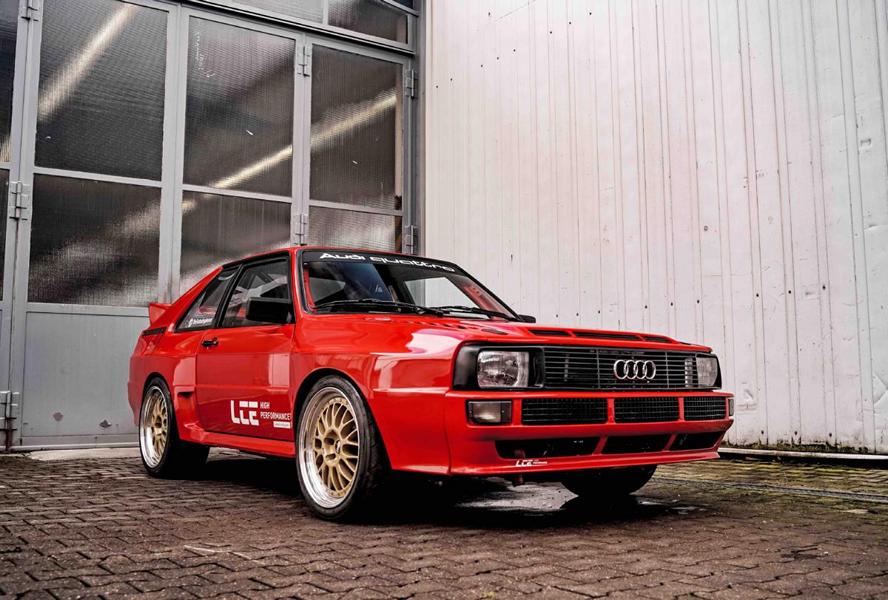
1985 Audi Sport Quattro: The Group B Homologation Special
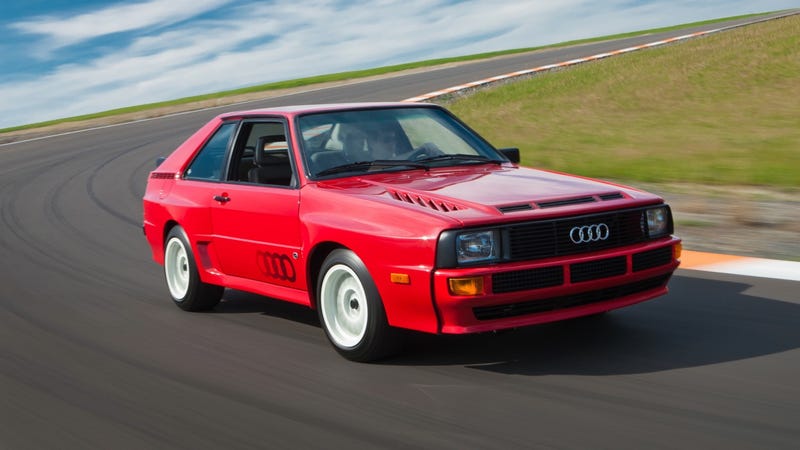
In Austria in 1980, just a year after four-wheel drive cars became eligible to compete in the WRC, Audi debuted the first Quattro rally car and forever changed the sport. Over the next half of the decade (and onwards, if you count the Pikes Peak specials), these Audis would be subjected to a period of rapid iterative evolution that led to the short-wheelbase Sport Quattro models that helped define the infamously fast and dangerous era of Group B rallying.
The relatively lax nature of the Group B regulations gave rise to a number of downright ferocious cars from Audi’s competitors (most notable being Lancia and Peugeot), and while it was not the most successful nor technologically advanced of these top tier cars by the end of the Group B era, the Sport Quattro is a worthy poster child for the lot of them—being first to the punch has its advantages.
The advent of the Group B class provided manufacturers with practically every leeway imaginable given they adhered to a basic set of limits on the car’s engine capacity, track width, and weight, but in order to race these monsters they had to produce 200 versions for the street.
The result of this requirement was a group of legendary homologation specials like the Lancia 037, Lancia Delta S4, MG Metro 6R4, and Peugeot 205 T16. Audi’s contribution to this lot was the Sport Quattro road car, a 300-horsepower box-flared rally weapon with license plates. In this week’s film we’re joining our host Sam Hancock for a tour through the history of Audi’s paradigm-shifting rally program in the 1980s, as well as through the Swiss Alps behind the wheel of a homologation special that lives up to its purpose.
More films, articles, and photos: https://www.petrolicious.com
Πέμπτη 13 Αυγούστου 2020
1980 Porsche 924 Carrera GT: From Entry-Level To Homologation Special

This week we’re returning to join host Sam Hancock for a drive in a special Porsche in Italy.
Among a certain group of the Porsche faithful, the 924 has long been considered a lowlier model in the company’s 911-dominated history. The base model 924 was in fact not an entirely in-house Porsche project either, born as it was from the reshuffled plans of a water-cooled Volkswagen sports car that never came to be.
The Porsche-badged, entry-level, front-engined machine that eventually came to be wasn’t the fastest car on the strassen of Stuttgart, but it was a well thought-out overall package, a suitable replacement for the aged 914, and also a solid base on which to build a sports racing program. Which is what Porsche did for the 1980 season, basing its sports racing contenders on the homologation special featured in today’s film, the 924 Carrera GT.
The Carrera GT road car formed the regulatory basis for Porsche to build racing versions of the Carrera that would compete for the factory team in the world’s major motorsport contests. Contests like the 24 Hours of Le Mans, where Porsche managed a sixth-place overall finish against outright prototypes in 1980 with the 924, and a class win the following year.
The racing pedigree of the 924 platform is owed in part to the potential of the base model 924 chassis, but the turbocharged wide body Carrera GT saw to it that some of that racing potential also made it onto the street. An output of around 210 horsepower is not an astounding amount on its own, but considering it was extracted from what was started as a pretty tame VW-Audi inline-four, it is considerably more impressive in that context. And speaking of context, it’s hard to imagine a better place to drive than the mountain roads of Lombardy.
More films, articles, and photos: https://www.petrolicious.com
Πέμπτη 11 Ιουνίου 2020
Εγγραφή σε:
Αναρτήσεις (Atom)


