Πέμπτη 24 Σεπτεμβρίου 2020

2004 Maserati MC12: The Racing Supercar


If you’d ever wondered what a Ferrari Enzo built for GT racing might look like, look no further than the Maserati MC12. Developed off of the Enzo’s chassis and V12 power plant, the road-going MC12 was built in very limited numbers (there were just two batches of 25 cars), and it was primarily built to return the Maserati marque to the international motorsport stage. After sorting out some regulatory issues with its homologation and dimensions, the racing variant of the MC12 performed more than admirably in the mid to late 2000s, racking up a number of constructor, team, and driver championship titles in GT racing series around Europe, mostly in the FIA GT series. The homologation special road car, while sharing a chassis and engine with the Enzo, had its output slightly detuned to ensure the Enzo remained the premiere Italian supercar offering, but the improved aerodynamics of the MC12 made the Maserati a bit quicker around circuits such as the Nordschleife. To find out just how good the road car really is, our host Sam Hancock took an MC12 out to the Vairano Handling Course in Vairano, Italy, to put it through its paces—with the mode selector set to “race,” naturally. More films, articles, and photos: https://www.petrolicious.com


Πέμπτη 10 Σεπτεμβρίου 2020

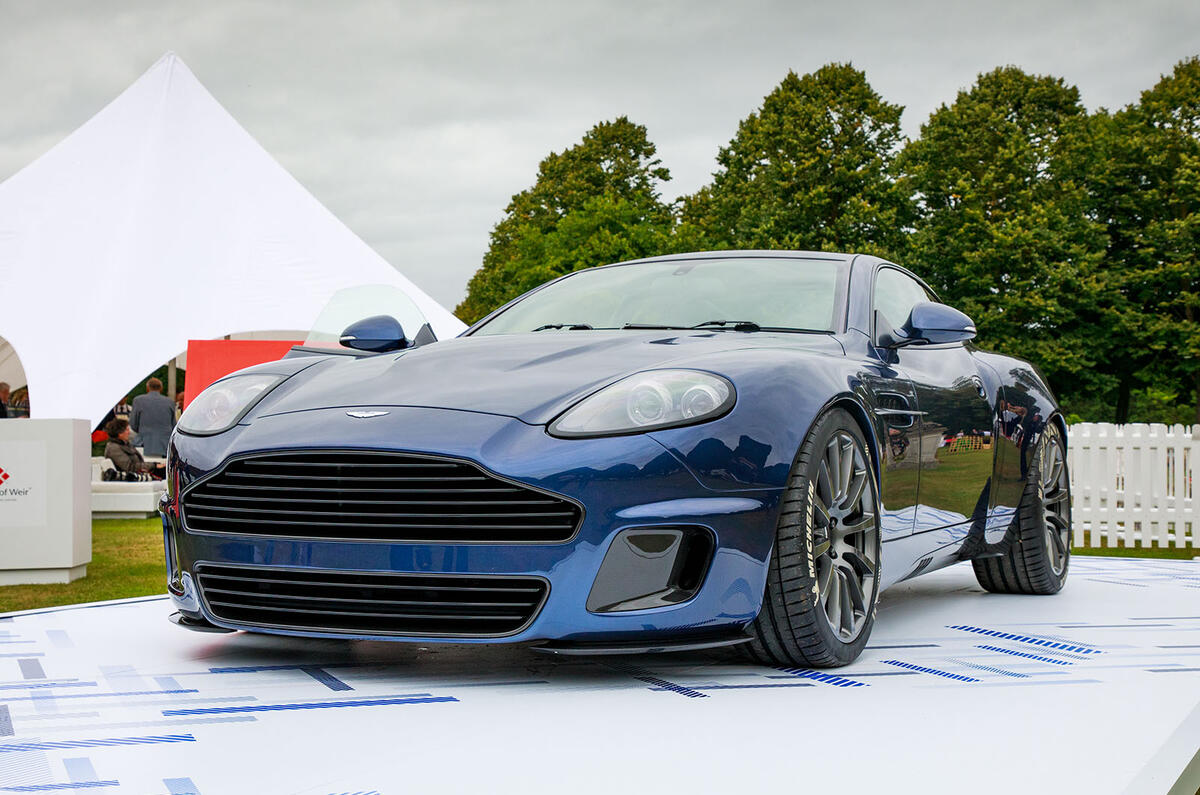
Aston Martin Callum Vanquish 25


Ian Callum's Vanquish 25: production version revealed | Autocar

Τρίτη 1 Σεπτεμβρίου 2020

Moto Technique - The EVO Program

Moto Technique 40th WSM Black.jpg

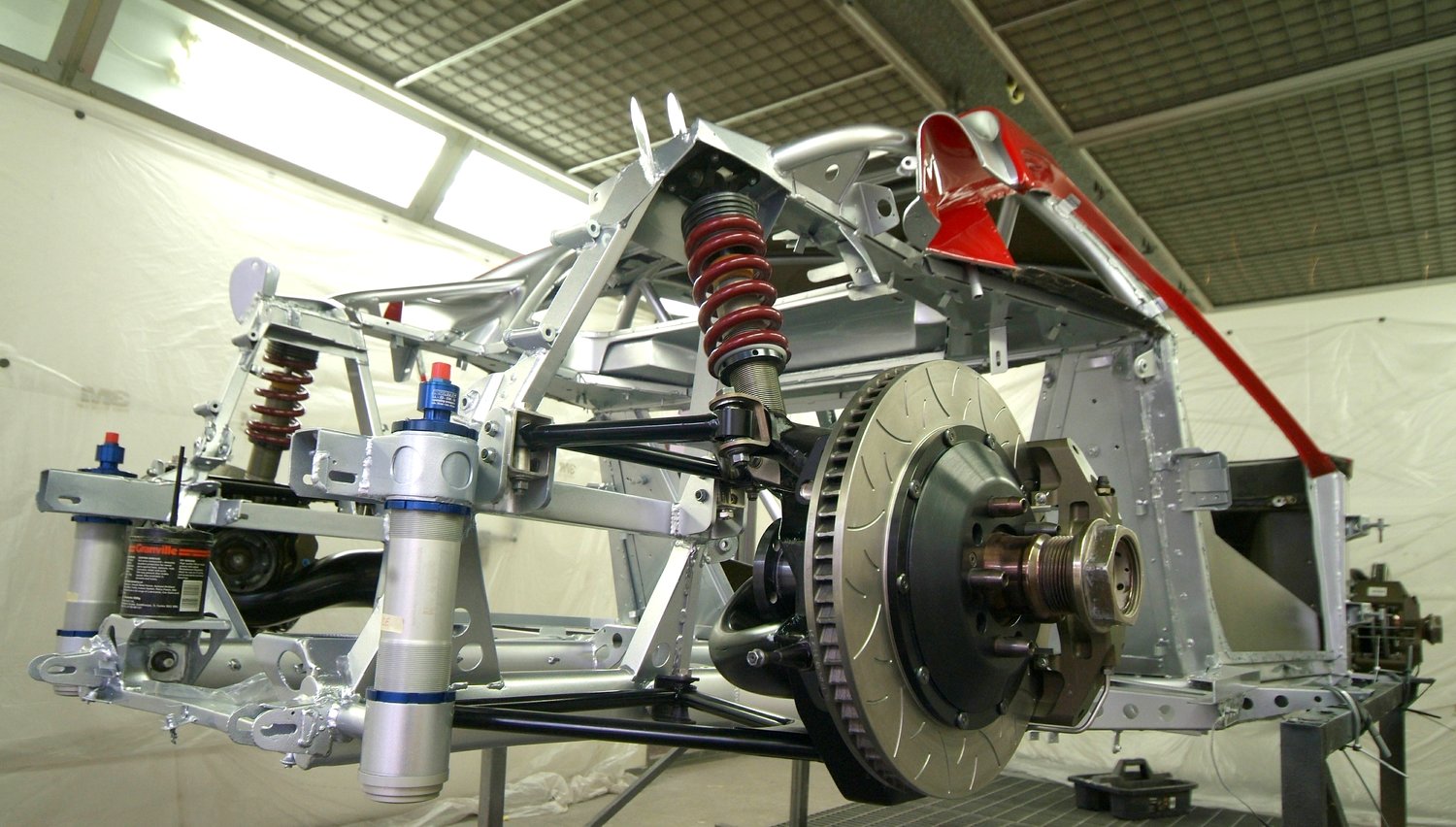
To celebrate our 40th Anniversary we are launching our EVO Program. For nearly 35 years we restored all our customer cars virtually nut and bolt perfect to period correct specification. Most modern cars are now too big, too powerful and too clinical. Some say, too sterile. Clients are now approaching us and telling us how much they love classics like the Dino 246 and Ferrari 308, but these cars are getting on for 40 and 50 years old. They want to drive them, but they also want modern standards of power, handling and reliability, whilst retaining the charm and character of the original. At Moto Technique we have probably restored, repaired or upgraded more Dino’s and Ferrari 308’s than anyone else in the UK. We really do know these cars inside out and back to front. That’s why we know all the areas where we can improve these wonderful machines and adapt them with more modern upgrades that just were not available at the time of manufacture or not viable for a production car due to cost effectivness. Our EVO Program is bespoke and based on a menu system of different specifications and finishes. This program really is limited only by a customer’s imaginations.


F40 fitting 9.JPG

Πέμπτη 27 Αυγούστου 2020

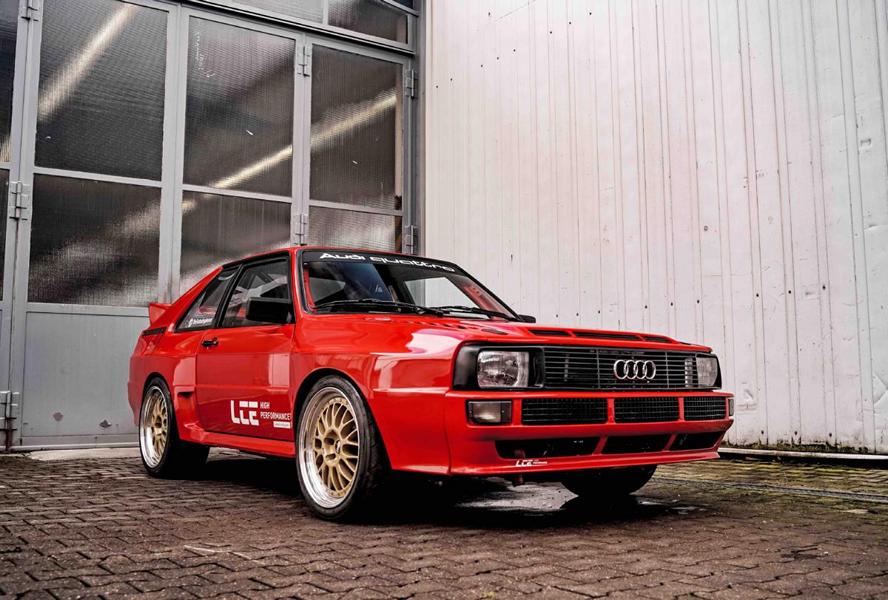
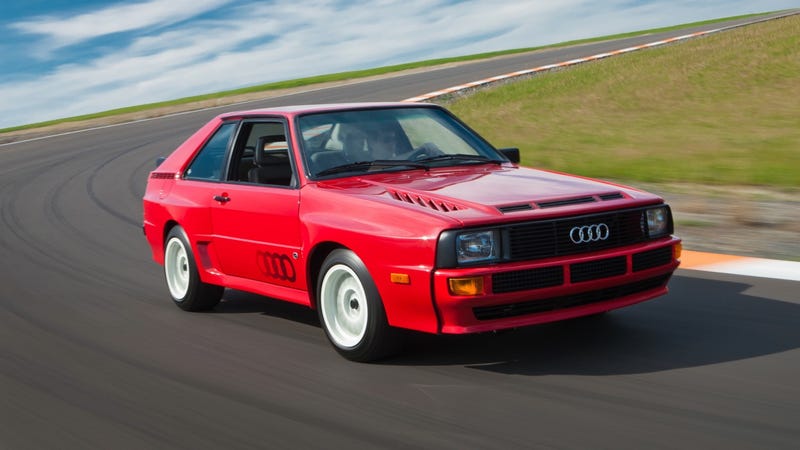
1985 Audi Sport Quattro: The Group B Homologation Special


1984 Audi Sport Quattro: First Drive


In Austria in 1980, just a year after four-wheel drive cars became eligible to compete in the WRC, Audi debuted the first Quattro rally car and forever changed the sport. Over the next half of the decade (and onwards, if you count the Pikes Peak specials), these Audis would be subjected to a period of rapid iterative evolution that led to the short-wheelbase Sport Quattro models that helped define the infamously fast and dangerous era of Group B rallying. The relatively lax nature of the Group B regulations gave rise to a number of downright ferocious cars from Audi’s competitors (most notable being Lancia and Peugeot), and while it was not the most successful nor technologically advanced of these top tier cars by the end of the Group B era, the Sport Quattro is a worthy poster child for the lot of them—being first to the punch has its advantages. The advent of the Group B class provided manufacturers with practically every leeway imaginable given they adhered to a basic set of limits on the car’s engine capacity, track width, and weight, but in order to race these monsters they had to produce 200 versions for the street. The result of this requirement was a group of legendary homologation specials like the Lancia 037, Lancia Delta S4, MG Metro 6R4, and Peugeot 205 T16. Audi’s contribution to this lot was the Sport Quattro road car, a 300-horsepower box-flared rally weapon with license plates. In this week’s film we’re joining our host Sam Hancock for a tour through the history of Audi’s paradigm-shifting rally program in the 1980s, as well as through the Swiss Alps behind the wheel of a homologation special that lives up to its purpose. More films, articles, and photos: https://www.petrolicious.com

Πέμπτη 13 Αυγούστου 2020

1980 Porsche 924 Carrera GT: From Entry-Level To Homologation Special

Porsche 924 Carrera GT: Fighting the mountain | Classic Driver ...


This week we’re returning to join host Sam Hancock for a drive in a special Porsche in Italy. Among a certain group of the Porsche faithful, the 924 has long been considered a lowlier model in the company’s 911-dominated history. The base model 924 was in fact not an entirely in-house Porsche project either, born as it was from the reshuffled plans of a water-cooled Volkswagen sports car that never came to be. The Porsche-badged, entry-level, front-engined machine that eventually came to be wasn’t the fastest car on the strassen of Stuttgart, but it was a well thought-out overall package, a suitable replacement for the aged 914, and also a solid base on which to build a sports racing program. Which is what Porsche did for the 1980 season, basing its sports racing contenders on the homologation special featured in today’s film, the 924 Carrera GT. The Carrera GT road car formed the regulatory basis for Porsche to build racing versions of the Carrera that would compete for the factory team in the world’s major motorsport contests. Contests like the 24 Hours of Le Mans, where Porsche managed a sixth-place overall finish against outright prototypes in 1980 with the 924, and a class win the following year. The racing pedigree of the 924 platform is owed in part to the potential of the base model 924 chassis, but the turbocharged wide body Carrera GT saw to it that some of that racing potential also made it onto the street. An output of around 210 horsepower is not an astounding amount on its own, but considering it was extracted from what was started as a pretty tame VW-Audi inline-four, it is considerably more impressive in that context. And speaking of context, it’s hard to imagine a better place to drive than the mountain roads of Lombardy. More films, articles, and photos: https://www.petrolicious.com